


How Employee Assessments Can Enhance Performance and Achieve Results
A memorable projects we worked on involved a client who asked seven of their key operational leaders to participate in a development assessment. What happened next was one of those reminders of why this work matters so much.
These leaders — spanning different ages, roles, and experience levels — were genuinely excited. They couldn’t wait to get their results back. And when we sat down with each of them one-on-one to walk through what they’d learned, the energy in the room was unmistakable. They weren’t just engaged in their own development. They were more committed to their organization than ever.
Helping an employee identify their strengths and areas for growth is a major component of making them feel truly valued — and as a leader, that’s one of the most powerful things you can do
Why Employee Assessments are Important
Employee assessments are one of the most underutilized tools in leadership development. When used well, they give organizations a clear picture of where their people are — and where they have the potential to go. They help leaders identify strengths, address gaps, and make smarter decisions about promotions, transitions, and team composition.
But beyond the organizational benefits, assessments send a powerful message to employees: we see you, and we’re invested in your growth. That message builds loyalty, drives engagement, and creates the kind of culture where people do their best work.
Choosing the Right Assessment Tool
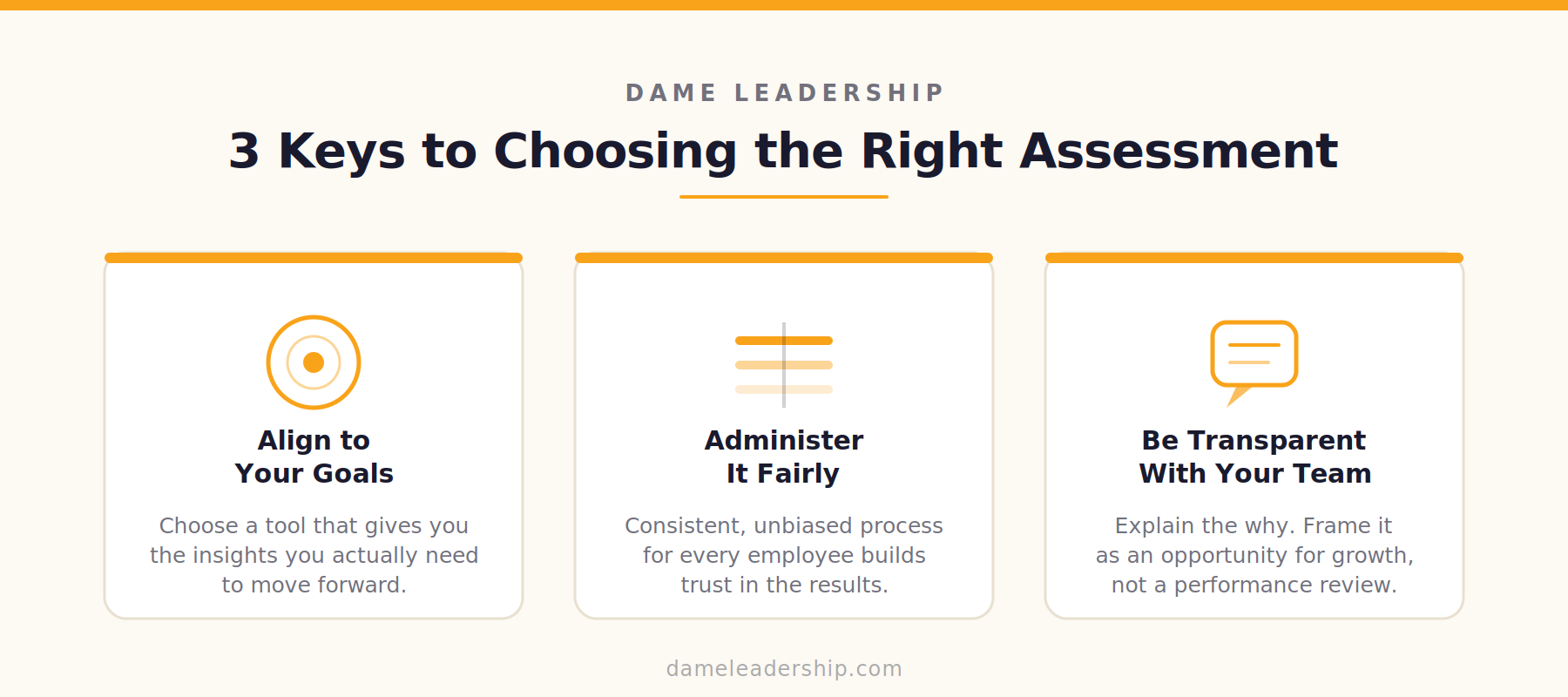
There are many different types of assessments available — personality assessments, skills evaluations, and 360-degree feedback tools. When choosing the right one, keep these three things in mind:
- Align to your goals. Choose an assessment that’s relevant to what you’re trying to accomplish. The tool should give you the specific insights you need to move forward — not just general data.
- Administer it fairly. Assessments should be consistent and unbiased across your team. This protects against perceptions of favoritism and ensures the results are trustworthy.
- Be transparent with your team. Explain what the assessment measures and how it will be used. Frame it as an opportunity — because that’s exactly what it is.
Getting the Most Out of the Process
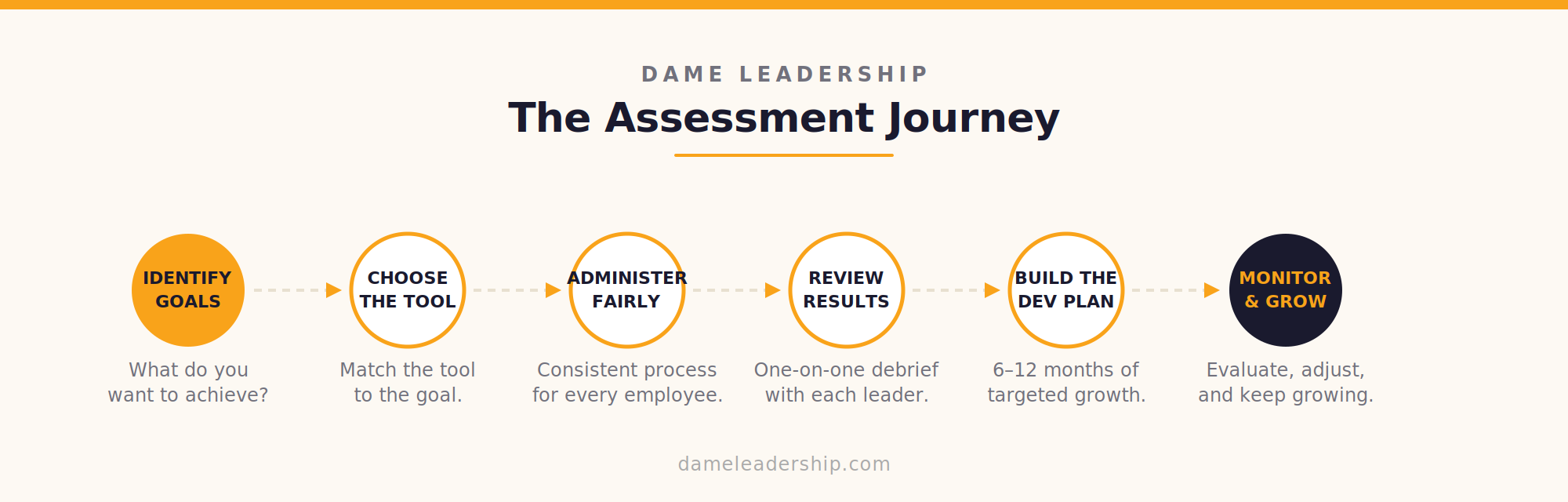
An assessment is only as valuable as what you do with it. Here’s how to turn results into real development:
- Use results to set clear goals, provide meaningful feedback, and build individualized development plans
- Communicate findings in a supportive, constructive way — the goal is growth, not judgment
- Monitor progress over time and refine the process as your team evolves
- Give employees the resources and support they need to act on what they’ve learned
The seven leaders we worked with walked away with six to twelve months of structured development ahead of them. More importantly, they walked away grateful — and more committed to their organization than ever. That’s the real return on a well-run assessment process.
The Role of AI in Today’s Assessment Process
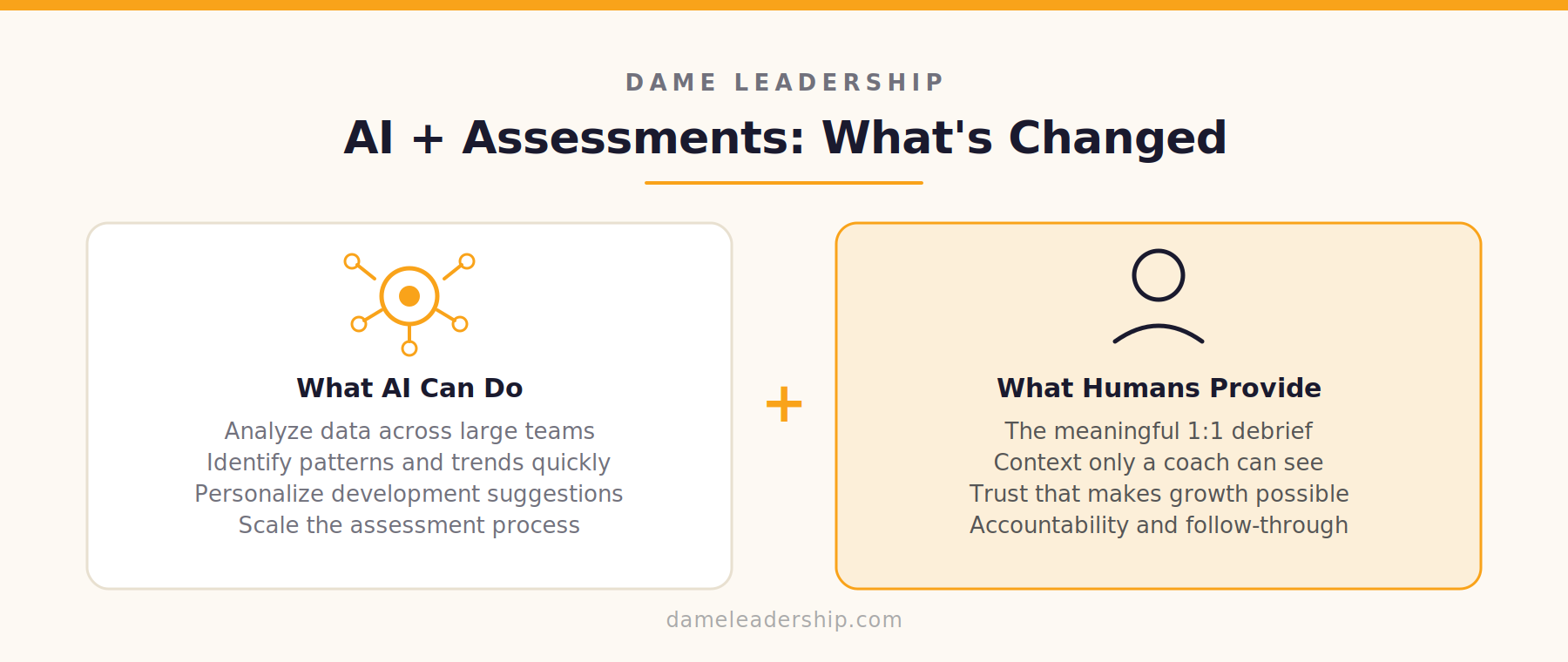
AI is increasingly being used to analyze assessment data, identify patterns across teams, and personalize development recommendations at scale. But technology doesn’t replace the human conversation that makes assessments meaningful. The one-on-one debrief — where a coach helps a leader make sense of their results — is still where the real growth happens.
Ready to invest in your team’s growth?
Dame Leadership works with organizations to design assessment processes that unlock real development — and build the kind of culture where people want to stay and grow. Let’s talk.