


The modern workplace has undergone a seismic shift. Between the rise of hybrid schedules, the “gig economy,” and remote collaboration, the physical office is no longer the only place where work happens. Yet, many leaders are still clinging to a management style that belonged to a different century.
If your definition of “productivity” depends on seeing a glowing monitor reflected in your employee’s glasses, it’s time for a radical mindset shift.
The Trap of “Line of Sight” Leadership
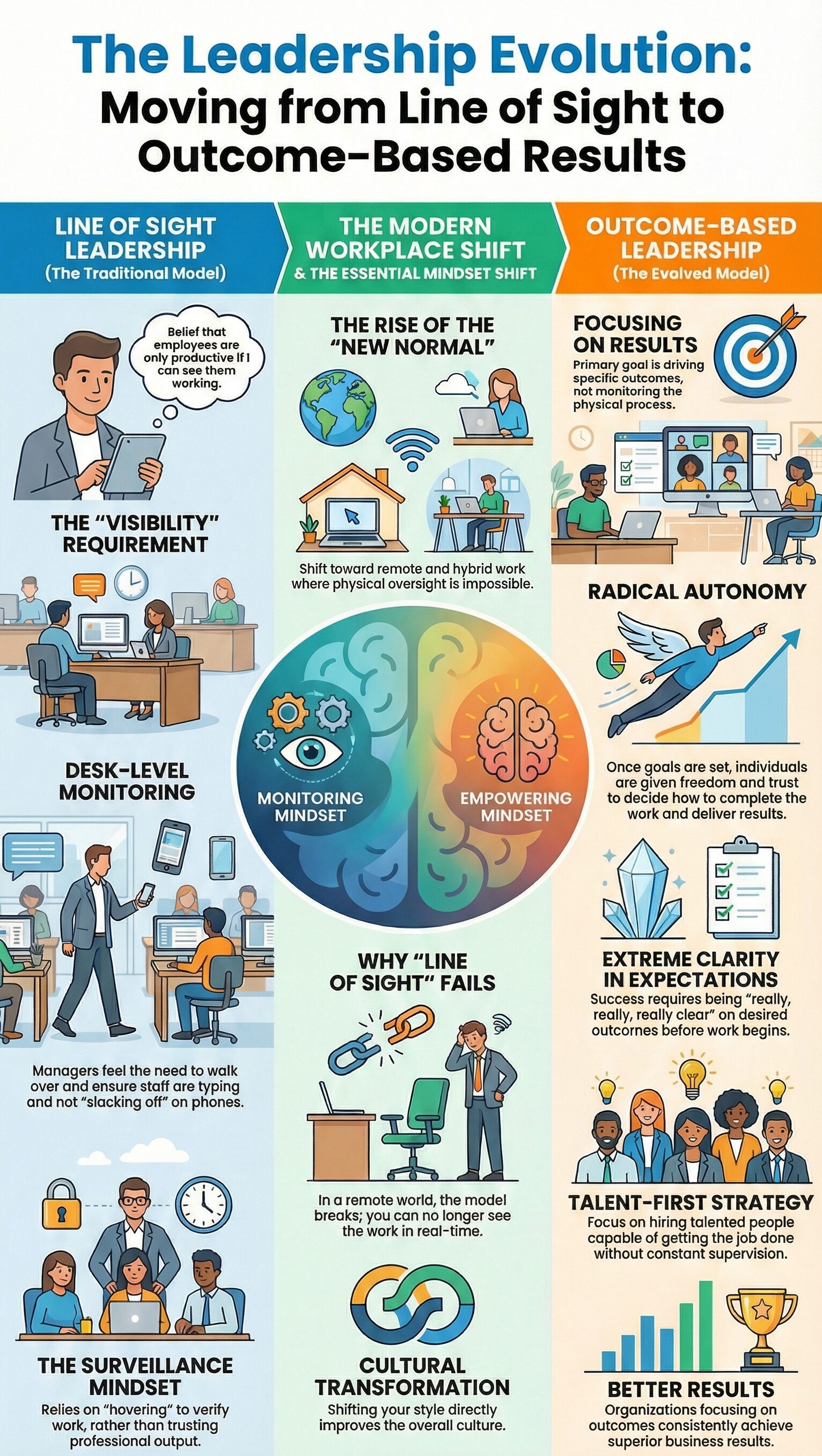
Line of Sight Leadership is exactly what it sounds like: a belief that work only occurs when you can physically see it happening. It’s the “butts in seats” mentality. Managers in this category often feel a sense of unease when they can’t walk past a desk to see if an employee is typing or on their phone.
The problem? Activity does not equal impact. Research consistently shows that micromanagement—a hallmark of line-of-sight leadership—is one of the primary drivers of employee burnout and turnover. According to a study featured in Harvard Business Review, managers who cannot “see” their direct reports sometimes fall into a spiral of over-monitoring, which actually erodes the very productivity they are trying to protect.
The Shift to Outcome-Based Leadership
Outcome-Based Leadership is the evolved alternative. Rather than monitoring the process (the “how” and “where”), you focus entirely on the results (the “what”).
This style is built on two pillars: Clarity and Trust. You set crystal-clear expectations for what success looks like, provide the necessary resources, and then get out of the way.
Why the Modern Workforce Demands This Shift
The “new normal” isn’t just a buzzword; it’s a fundamental change in the labor force’s psychology. Leading by outcomes is the only way to succeed in a distributed environment for several reasons:
- Attracting Top Talent: High-performers crave autonomy. They don’t want to be hovered over; they want to be empowered to solve problems in their own way.
- Scalability: You cannot personally watch 50 people. By focusing on outcomes, you create a scalable system where performance is measured by data and deliverables rather than visual confirmation.
- Psychological Safety: When you trust your team to deliver results without constant surveillance, you foster a culture of psychological safety. Employees who feel trusted are more likely to take risks, innovate, and remain loyal to the organization.
How to Make the Transition
Moving from a “line of sight” mindset to an “outcome” mindset doesn’t happen overnight. It requires intentionality:
-
Define Your KPIs, Not Your Hours: Be incredibly specific about what a “win” looks like. If a project is due Friday at 5:00 PM and meets all quality standards, does it matter if the employee did the bulk of the work at 10:00 PM on a Tuesday?
-
Hire for Character and Competence: Outcome-based leadership only works if you have the right people in the seats. Hire individuals who have a track record of self-management.
-
Communication is the New Office: In a hybrid or remote world, communication is the work. Use regular check-ins to discuss progress toward outcomes rather than just “checking up” on people.
The Takeaway: If you are still leading by line of sight, you aren’t just managing—you’re hovering. Change your mindset, and you’ll change your culture. When you stop counting hours and start measuring impact, you don’t just get better results; you get a more engaged, purposeful team.
Is your leadership team struggling to let go of the “Line of Sight” mentality?
At Dame Leadership, we specialize in helping organizations transition to high-trust, high-performance cultures. Explore our leadership development programs to help your team lead with more purpose and less interference.